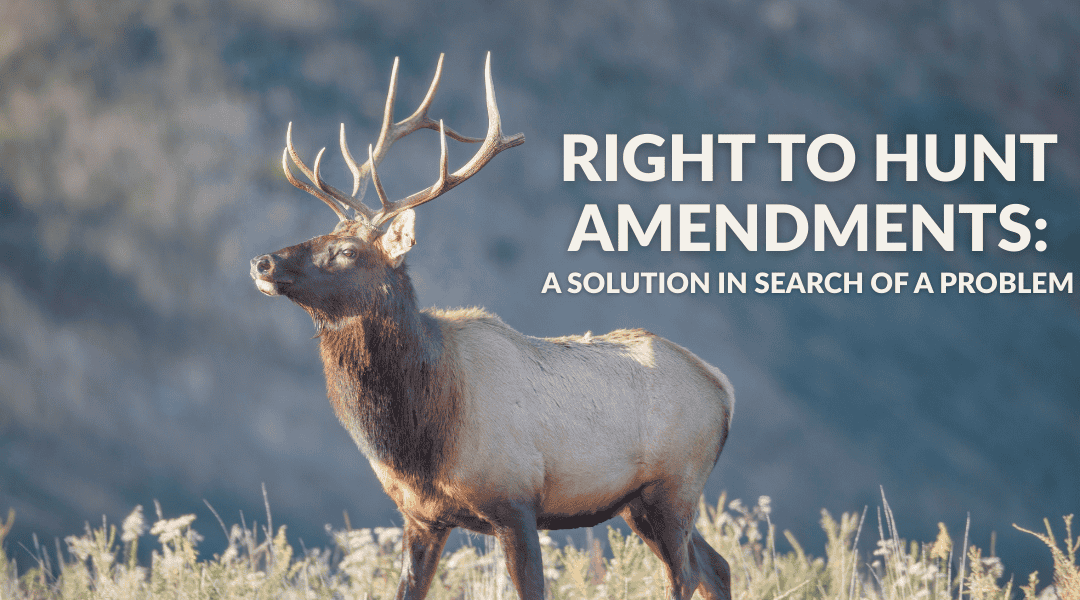
Colorado Voters Will Decide Whether to Lock a New Right to Hunt and Fish Into the State Constitution
Coalition urges voters to look beyond the campaign slogan and examine what Amendment 83 would actually do
FOR IMMEDIATE RELEASE
Aug. 20, 2026
Denver, Colo.—A coalition of conservation, wildlife, hunting, animal protection, and civic organizations today responded to the Colorado Secretary of State’s announcement that Amendment 83 has qualified for the Nov. 3 general election ballot.The proposed constitutional amendment would change the Colorado Constitution to establish a right to hunt, fish and harvest wildlife using “traditional methods,” while placing new constitutional constraints on how Colorado manages wildlife and regulates those activities.
“Qualifying for the ballot is not a mandate from Colorado voters,” said Clint Talbott, vice president of Science for Colorado Wildlife. “ It simply means voters now have the opportunity to look closely at what Amendment 83 would actually do. This measure would fundamentally change Colorado by elevating hunting and fishing to a constitutional right and constraining how wildlife can be managed in the future. Voters deserve to understand those consequences before deciding whether this belongs in Colorado’s Constitution.”
Amendment 83 would take decisions about hunting and fishing that now can be addressed through Colorado’s legislative and regulatory processes and elevate them to constitutional status. Constitutions are intentionally difficult to change, and passing this amendment could constrain the ability of future Coloradans, legislators, wildlife commissioners, and wildlife professionals to respond to changing conditions.
“Colorado’s Constitution is not the place to lock in a particular approach to wildlife policy for generations to come,” said Jen Clanahan, executive director of Colorado Nature League. "Amendment 83 would take an issue that should remain subject to public debate, legislation, and changing circumstances and elevate it to constitutional law. Once something is written into the Constitution, it is far harder for Coloradans to change course. Voters should think carefully before surrendering that flexibility.”
The coalition emphasized that the November election will not be a referendum on whether hunting or fishing should exist in Colorado because those activities not only thrive but are protected by state law. The question before voters is whether Colorado should amend its Constitution to create a new right that privileges one user group of wildlife and public lands over all others.
“I am a passionate big game hunter and strong supporter of hunting and fishing in Colorado. But I oppose this Right to Hunt ballot measure because it will lead to the repeal of common sense restrictions on unethical and cruel hunting and trapping practices that the public understandably expects, like the use of steel-jawed leghold traps, wildlife killing contests, bear baiting with jelly donuts, and the spring bear hunt that kills mother bears and causes orphaned bear cubs to starve to death,” said Eric Washburn of Colorado Hunters and Anglers for Sensible Wildlife Conservation. “This ballot measure represents the single greatest risk to the future of hunting in Colorado because it will bring back barbaric and unfair ‘traditional methods’ of hunting and trapping that the majority of Coloradans and the state wildlife commission have already rejected, thus causing the public to eventually turn against our sport.”
“Colorado has a responsibility to manage wildlife for the benefit of healthy ecosystems and all Coloradans,” said Delia Malone, ecologist and board president of ColoradoWild. “Amendment 83 could make it significantly harder to address harmful or outdated practices, including methods that may have serious consequences for wildlife and the broader ecosystem. We should be moving toward stronger protections for wildlife, not putting barriers in our constitution that lock in only one management type.”
The initiative also uses undefined terms such as “traditional methods” and “necessary for sound scientific wildlife conservation and management” that could significantly change how wildlife is managed in Colorado, and could invite years of litigation over what those terms mean.
“By creating a constitutional right tied to ‘traditional methods,’ Amendment 83 could have far-reaching consequences for how Colorado regulates activities such as trapping, hounding, baiting, and other unethical methods of killing wildlife that Colorado voters have already outlawed,” said Roland Halpern, executive director of Colorado Voters for Animals. “Those decisions have already been decided and Colorado voters have been clear on their values. This amendment is designed to undo those previous amendments through costly litigation, against the will of Coloradans.”
“Wildlife management is not static. Populations change, ecosystems change, new scientific information emerges, and the impacts of different management practices become better understood,” said Delaney Rudy, Colorado director for the Western Watersheds Project. “Colorado needs the flexibility to respond to those changes using the best available science. We should not lock particular methods, privileges, or management constraints into the Constitution and make it harder for wildlife professionals and the public to adapt as circumstances change.”
Colorado already has a constitutional right to participate in its government through the ballot. Amendment 83 would create a very different kind of constitutional protection: one that could limit how Coloradans and their elected and appointed representatives address wildlife policy in the future.
“Colorado voters should never be asked to give up their ability to shape wildlife policy simply because a special interest wants its preferred policies placed beyond the reach of fundamental democratic debate,” said Michelle Lute, PhD and executive director with Wildlife for All. “ Wildlife belongs to all Coloradans, and decisions about how they are managed should remain accountable to the public, elected officials, wildlife professionals, and changing science. Amendment 83 would move in the wrong direction by putting a sweeping new mandate into Colorado’s Constitution that is designed to silence voters.”
Coloradans will have the final say on Amendment 83 when they vote in the Nov. 3 general election. The coalition encourages every Colorado voter to read the amendment, understand what it would put into the state Constitution, and vote NO on Amendment 83.
###