Resources
This is your toolkit for spreading the word and opposing Amendment 83. Whether you're talking to neighbors, tabling at an event, or posting online, the resources below are here to help you vote no and make the case. Download, print, and share widely, and check back for updates as we get closer to November.

Fact Sheet (8.5x11)
A print-ready one-pager with the key facts, figures, and context on Amendment 83. Ideal for tabling events, town halls, or leaving behind after a conversation.
Half Sheet (5.5x8.5)
A print-ready one-pager with the key facts, figures, and context on Amendment 83. Ideal for tabling events, town halls, or leaving behind after a conversation.
Postcard
A simple, direct way to reach voters directly — ideal for canvassing, tabling, or handing out at events.
Yard Sign (24x18)
Show your support where your neighbors will see it. Download the print-ready file and have it printed at any local print shop.
Event Sign (11x17)
Create awareness and hang a sign at a tabling event. Download the print-ready file and have it printed at any local print shop.
Talking Points
Quick, conversational language for phone banking, canvassing, or everyday conversations with friends and family.
Social Post Graphics
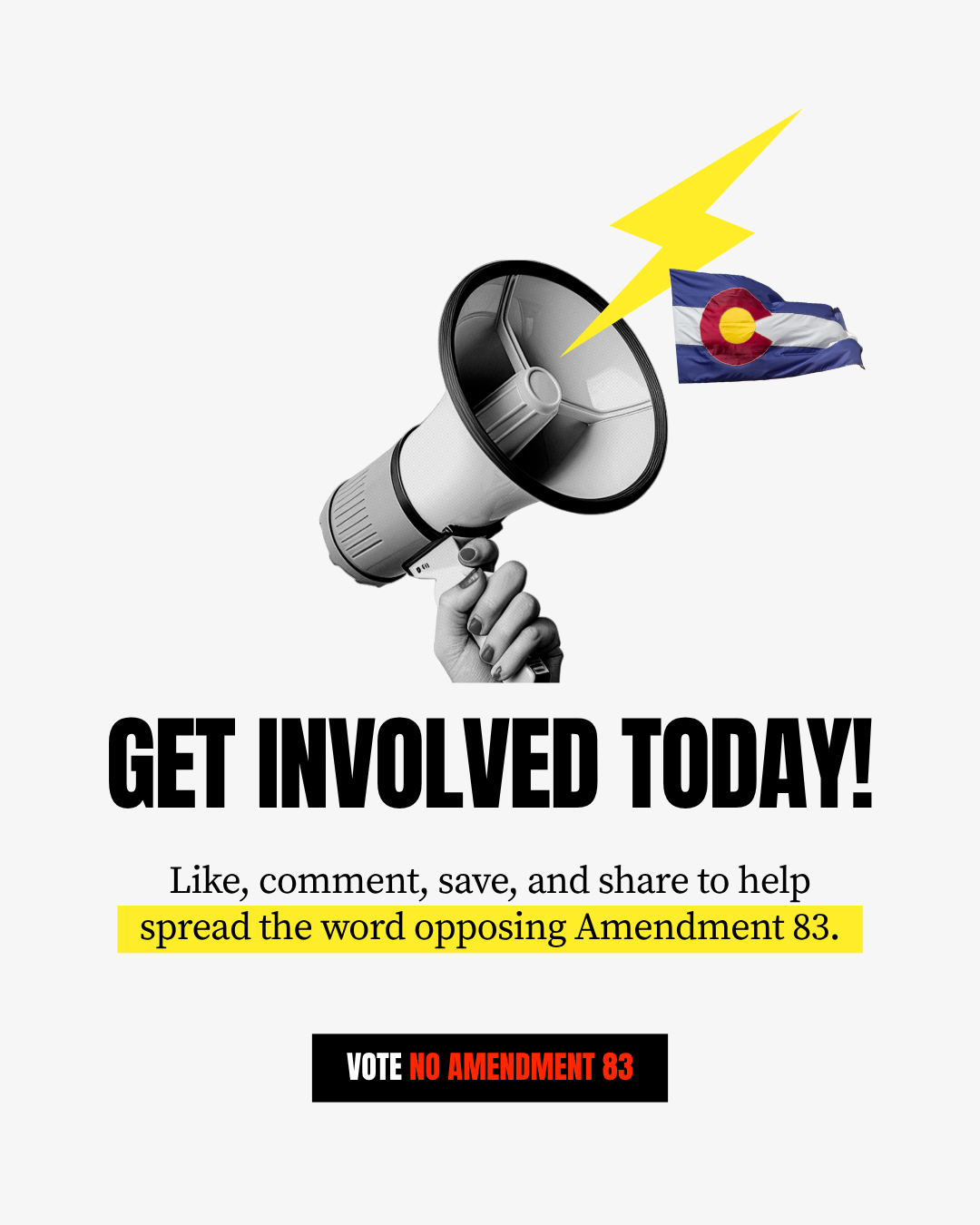
Post graphics and sample captions, ready to share across your social platforms.
Facebook Banners
Cover graphics for your Facebook page, or use as a horizontal post image.
Social Media Graphics
Facebook Banners
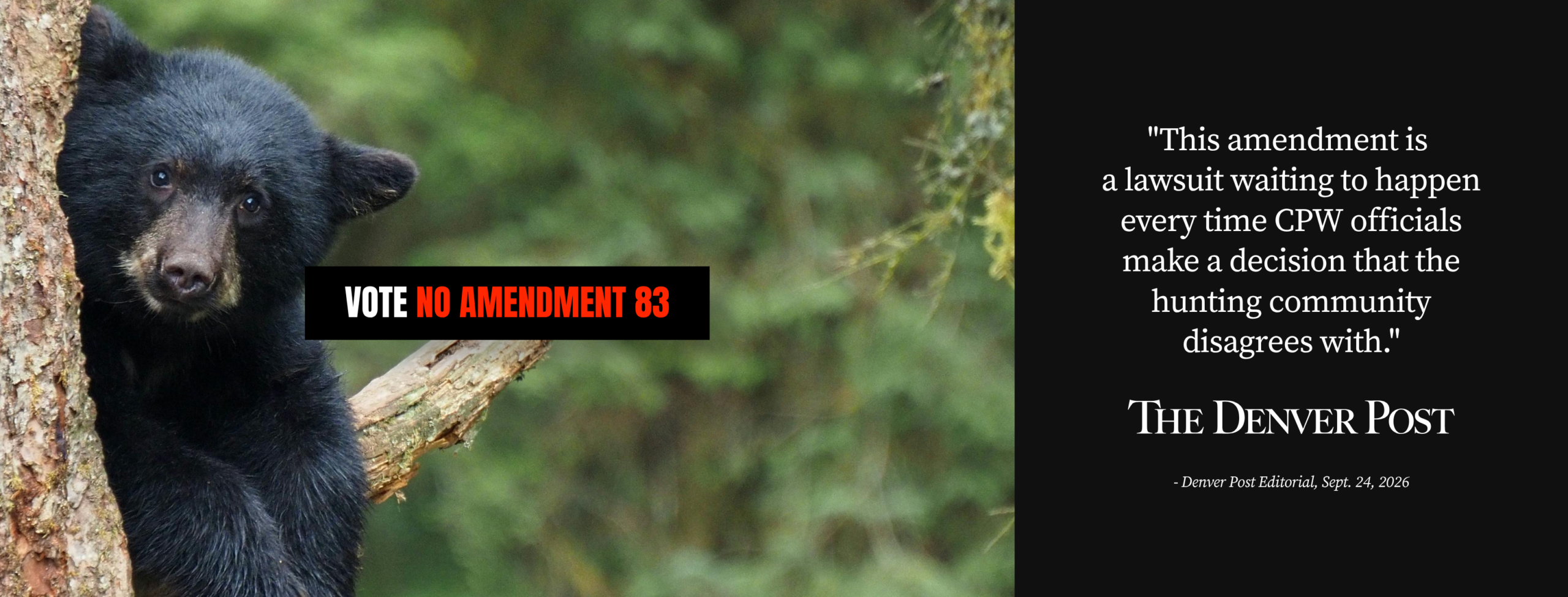
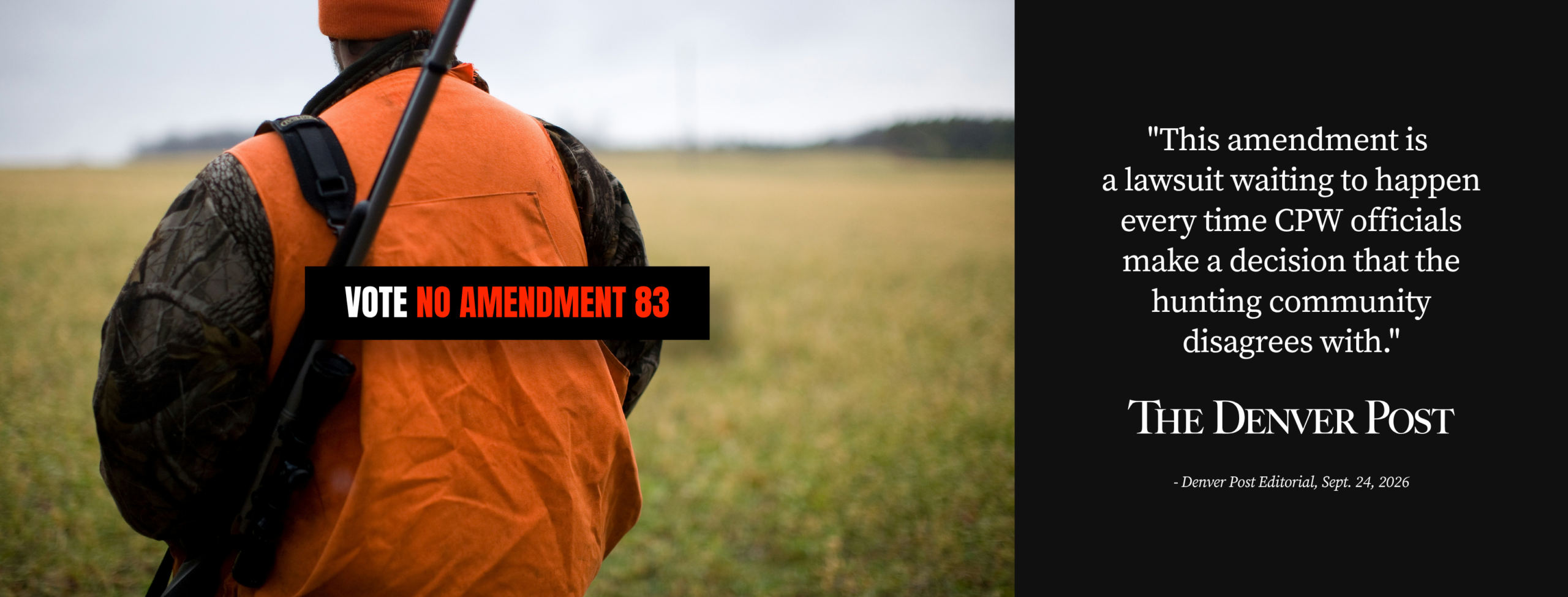
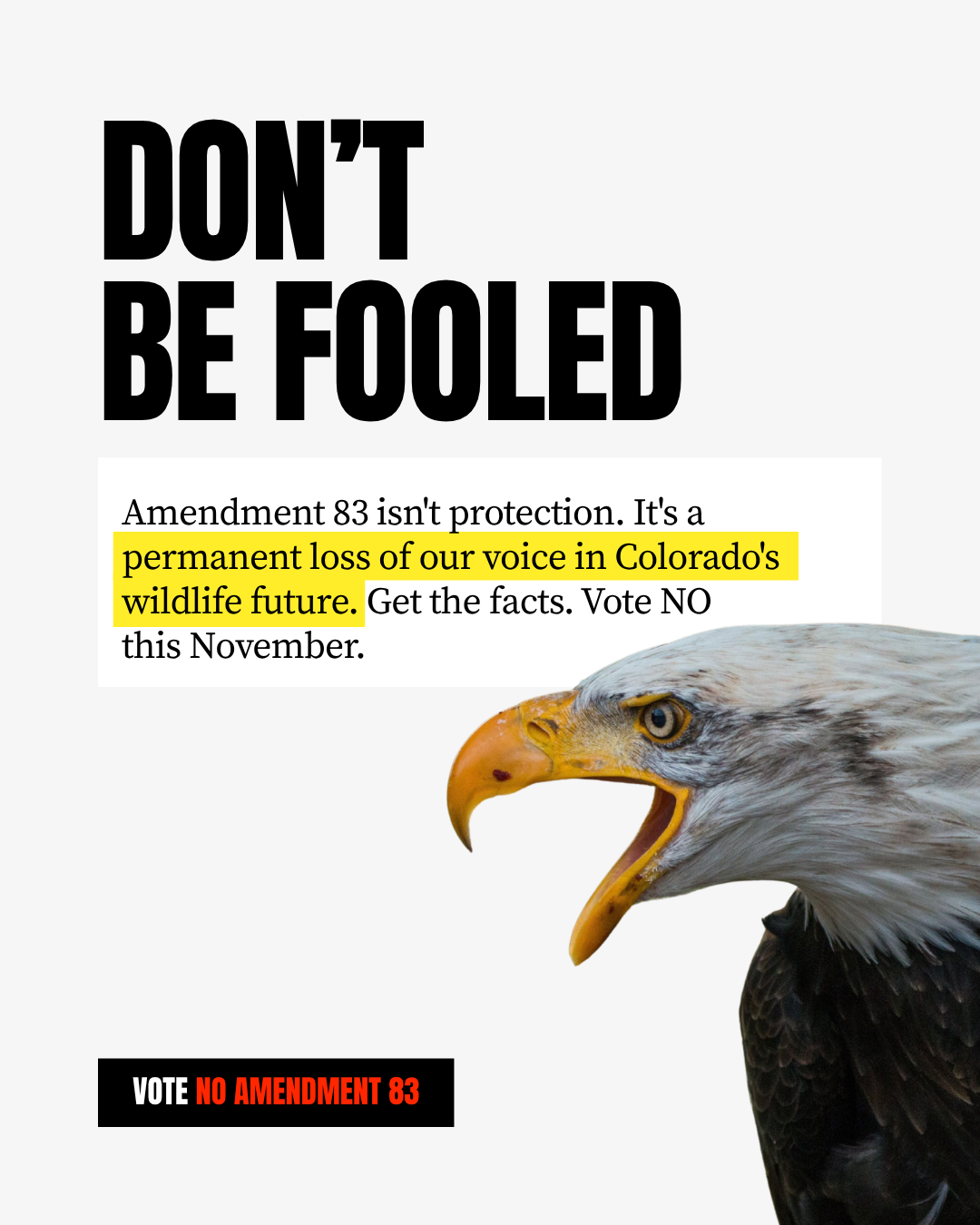
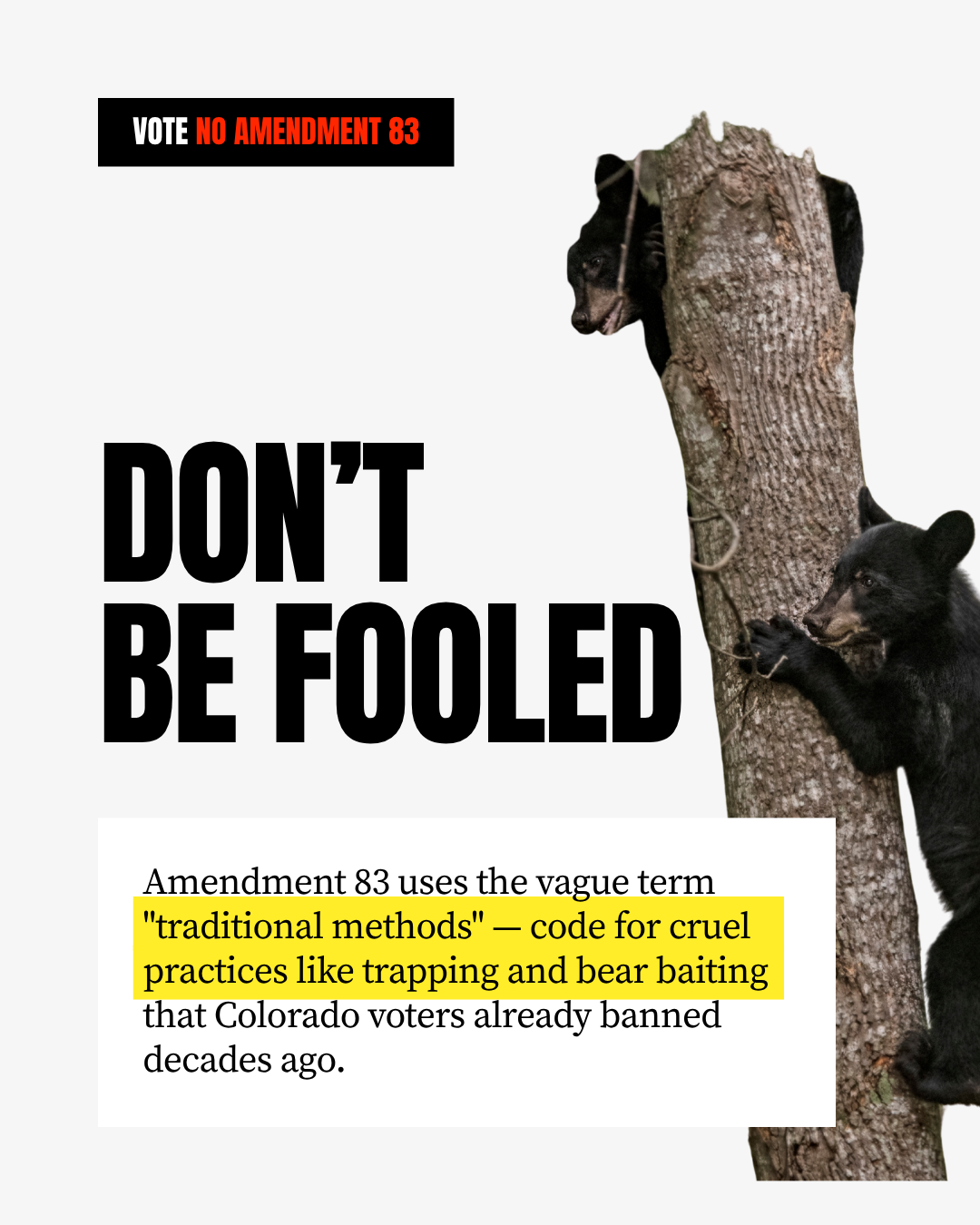
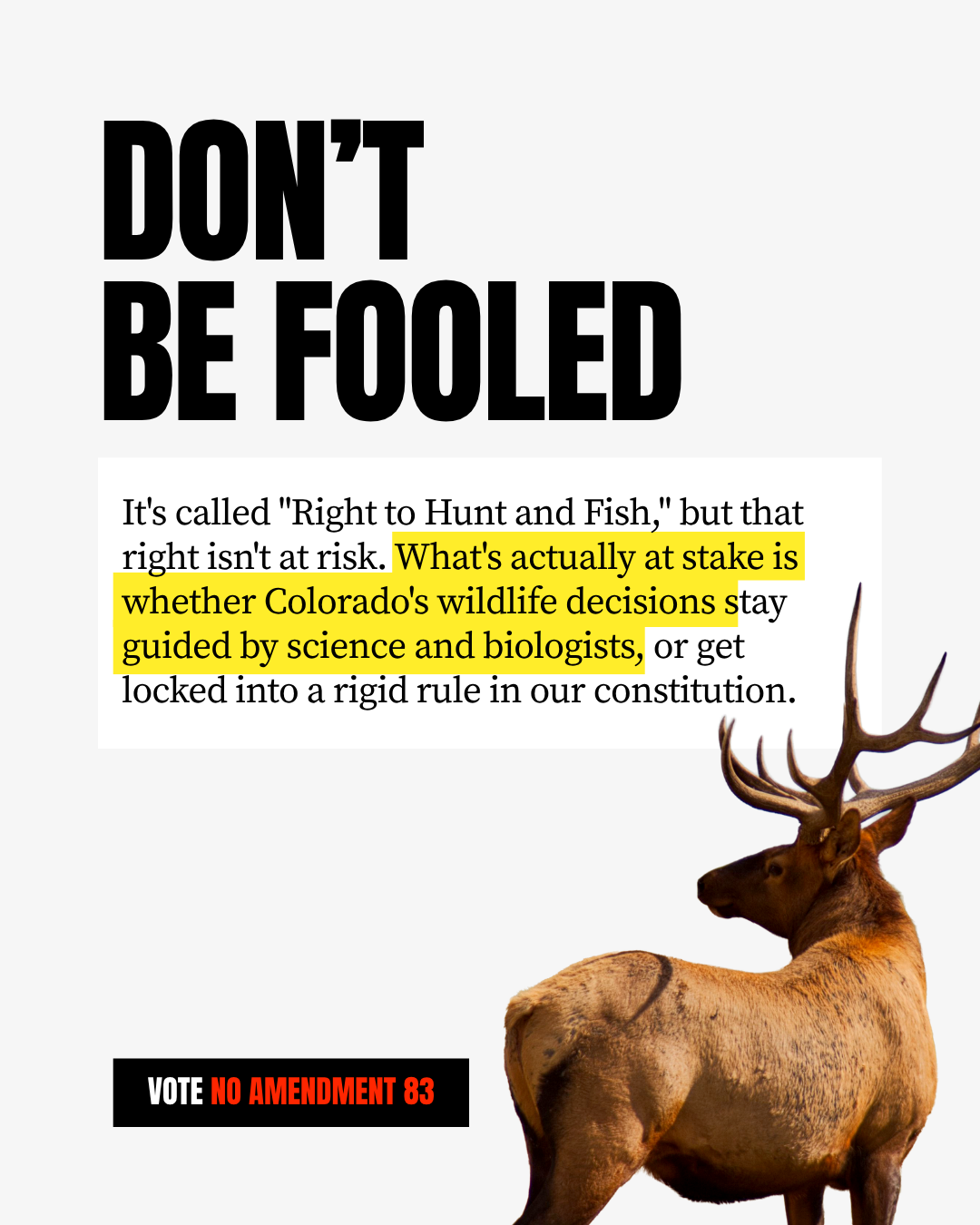
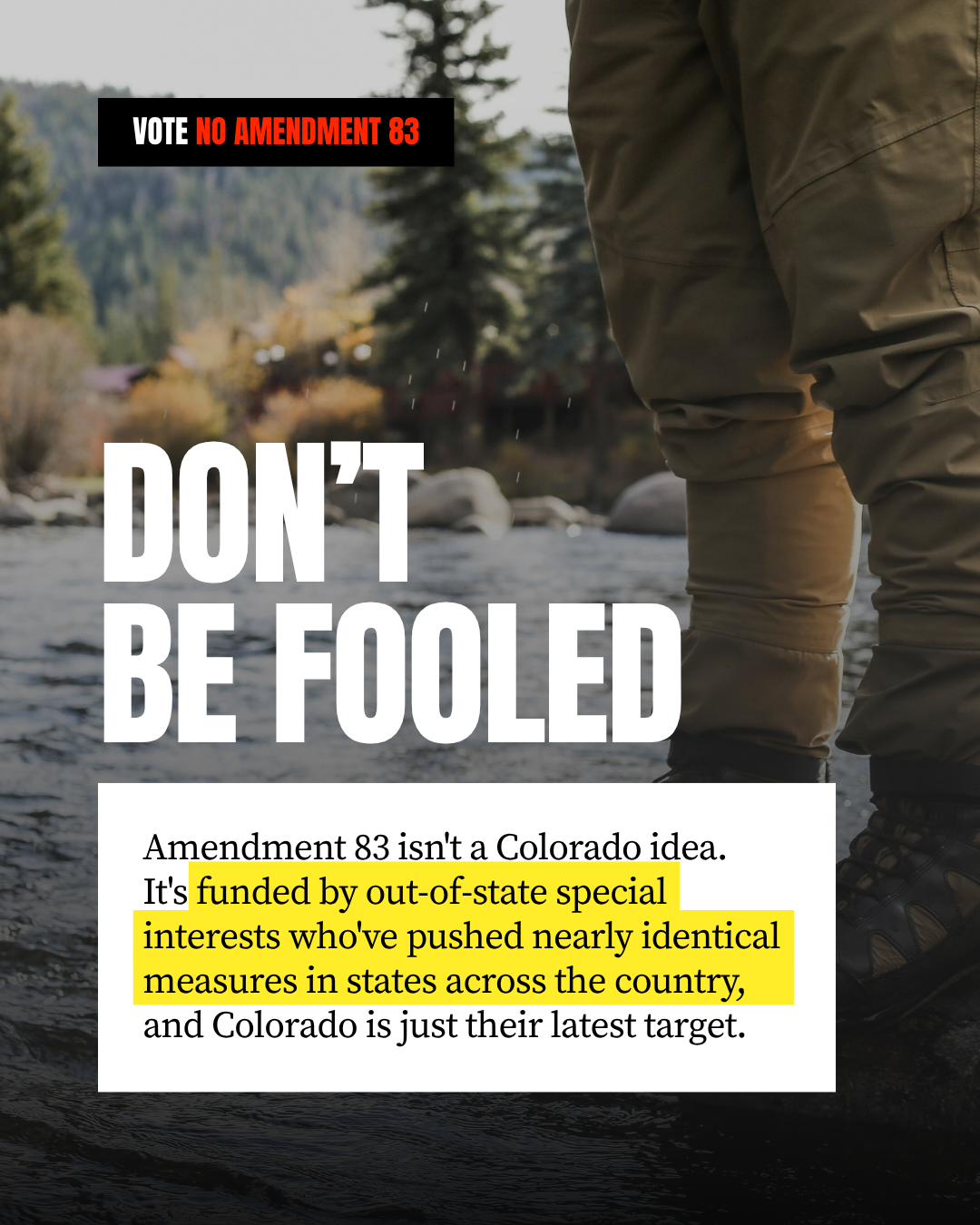
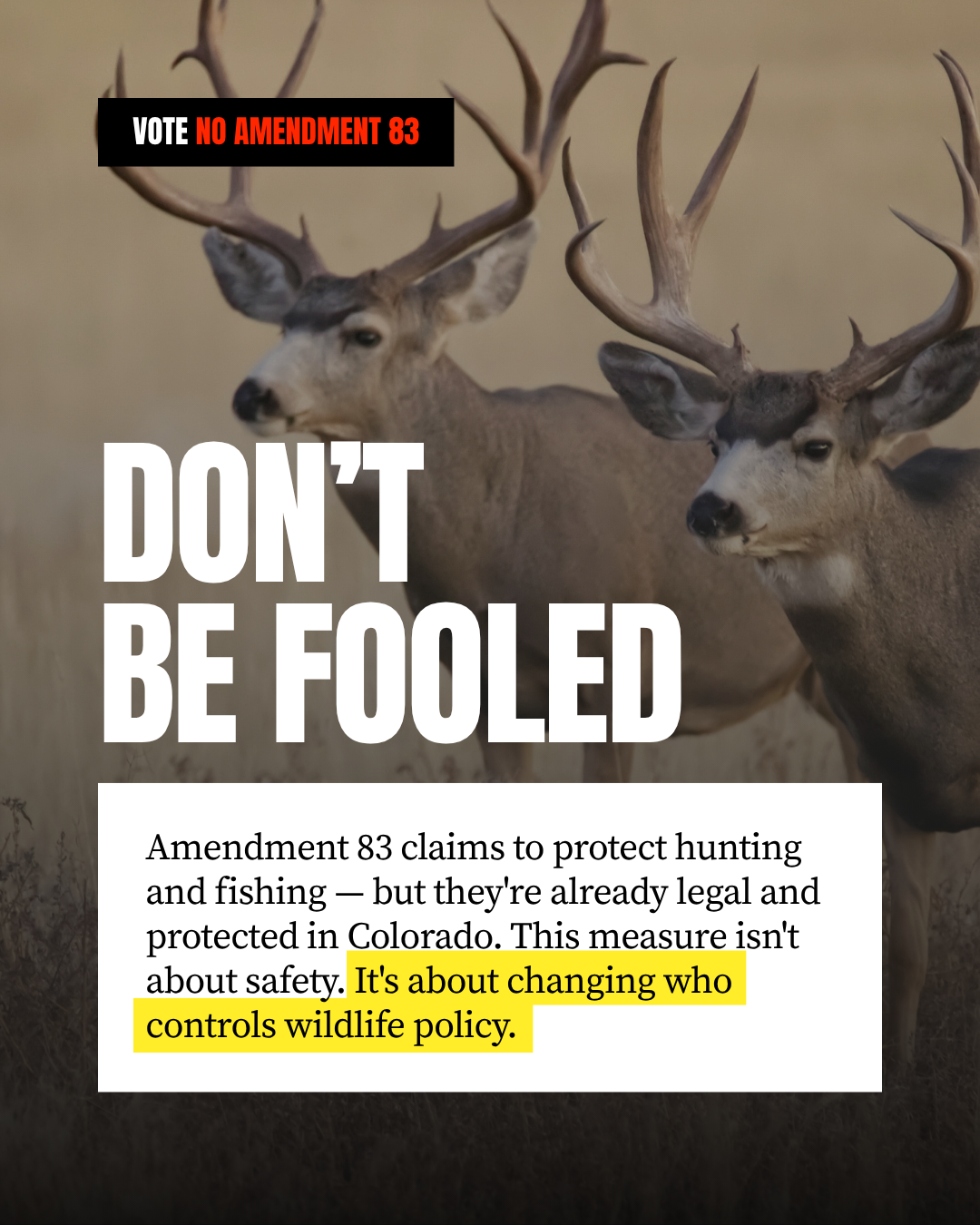
Sample Twitter/X:
Amendment 83 isn’t about protecting hunting and fishing. Both are already legal in Colorado. It’s about changing who gets to make wildlife policy and giving courts more power to decide what future laws, regulations, and ballot measures can do. I’m voting NO on Amendment 83.
Colorado’s wildlife belongs to all of us, not wealthy, out-of-state special interests. Amendment 83 would put vague language in our constitution, make hunting and fishing the “preferred means” of wildlife management, and make it harder for voters and experts to respond to changing science. Vote NO on Amendment 83.
Our wildlife challenges will change. Science will change. Colorado will change. Amendment 83 would lock one approach to wildlife management into our Constitution, using vague terms that would put these decisions into lengthy court battles. Let voters, not lawsuits, shape Colorado’s wildlife future. Vote NO on Amendment 83.
Amendment 83 could open the door to cruel, outdated wildlife practices, including trophy hunting, steel-jaw traps, bear baiting, and using packs of dogs to chase wildlife. Colorado voters have rejected these practices for decades. Oppose AMENDMENT 83 to ensure future generations have a voice in protecting wildlife.
Sample Facebook / LinkedIn / Instagram Caption:
Amendment 83 isn’t about protecting hunting and fishing—they’re already legal in Colorado. It’s about changing who gets to make wildlife policy. 83 would put vague language into our Constitution, make hunting and fishing the “preferred means” of wildlife management, and potentially move future wildlife decisions from voters, lawmakers, and wildlife experts into the courts. Colorado’s wildlife belongs to all of us. We should keep the flexibility to respond to changing science and conservation needs—not lock one approach into our Constitution at the urging of out-of-state special interests. Join me in voting NO on Amendment 83.
Talking Points
1. Constitutions are supposed to protect rights, not take them away.
Amendment 83 misleads voters into thinking they are protecting the right to hunt and fish, when it actually takes away your voice in future wildlife decisions. Because constitutional amendments are difficult to change, voters should understand not only what Amendment 83 says today, but how it could affect future wildlife policy.
2. Amendment 83 isn't simply about protecting hunting and fishing — it would change the rules for who gets to make wildlife policy in Colorado.
Hunting and fishing are already legal in Colorado and carefully regulated under existing state and federal laws — they're not under threat. But Amendment 83 changes the Colorado Constitution to create new, extremely narrow constitutional standards that future wildlife laws, regulations, and ballot measures must fall under. The amendment would bind not only Colorado Parks and Wildlife (CPW), but also future decisions by the Colorado Parks and Wildlife Commission and the Colorado General Assembly — meaning all wildlife-related policies adopted by these bodies would have to comply with the new constitutional language and could be challenged if they do not.
3. Amendment 83 enshrines theintentionally vague and undefined term "traditional methods."
Proponents have advised using this term as a veiled reference to cruel, indiscriminate, and outdated practices like trapping, baiting, and hounding — methods Colorado voters have already voiced their opposition to. These practices are controversial and widely opposed by many members of the public. Coloradans already voted to restrict trapping in 1996, and hunting bears with hounds and over bait in 1992.
4. Amendment 83 could make it harder for Colorado voters and future policymakers to adopt new wildlife protections, because it narrows what future wildlife decisions can be based on.
The amendment says wildlife may be regulated only when "necessary" for sound scientific wildlife conservation and management, public safety, or preserving future hunting and fishing opportunities. Those purposes do not explain how other public interests — including habitat restoration, biodiversity, nongame wildlife conservation, ecosystem health, or coexistence — should be weighed when they conflict with hunting opportunities.
5. Amendment 83 is part of a national campaign backed by wealthy, out-of-state special interests that have pushed nearly identical measures in states across the country. Colorado is just the latest target.
This amendment imports one-size-fits-all constitutional language developed outside our state, rather than addressing the needs of Coloradans. Colorado's wildlife policies should be shaped by Colorado voters, elected officials, wildlife experts, and local communities — not outside special interests with a national agenda.
6. Amendment 83 restricts how Colorado can manage wildlife in the future by prioritizing hunting and fishing as the "preferred means" in the Constitution.
By creating a constitutional preference for hunting and fishing as the "preferred means" of managing wildlife, Amendment 83 could limit policymakers' flexibility to respond to changing science, emerging conservation needs, and evolving public values.
7. Amendment 83 restricts how Colorado can manage wildlife in the future by prioritizing hunting and fishing as the "preferred means" in the Constitution.
Wildlife management in Colorado is currently guided by biologists and population data — not political mandates. Amendment 83 would flip that: instead of decisions following the science, the constitution would dictate the outcome in advance, regardless of what future research or population data shows. Locking a single management method into the constitution removes the flexibility wildlife agencies need to respond to real, evolving conditions on the ground.
Have questions? Contact us for additional resources or check out our FAQ page for more details.
Social Post Graphics